IUCN Status
 : Not Applicable
Author: Neetu Kumari
Hi! Neetu this side, I'm a keen observer of the nature around me since my childhood and I always wanted to share the beauty of the mother nature with others too, so, I'm here to share my observations about plants.
- Shrubs
- Khetri / Jhunjhunun
- Naturally grown
-
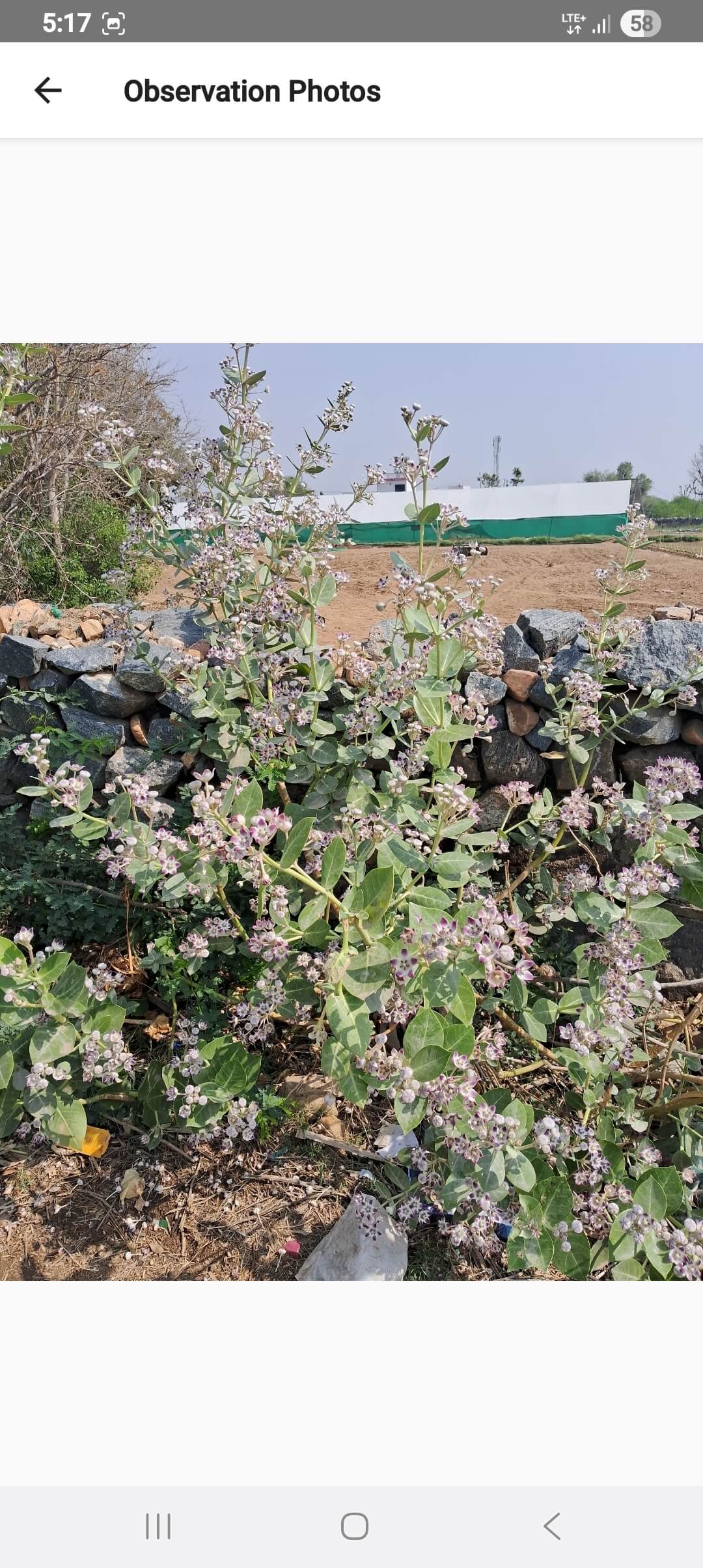
Habit: It is a medium sized shrub or tree.
Habitat: It grows primarily in desert or dry shrubland biomes; it is native to North and tropical Africa to Indo-China.
Sources: POWO, FOI.
Calotropis procera always has been the part of Ayurvedic medicine systems; decocotions of flowers are used for asthma, cold, or digestive issues. Vernacularily the gynostegium and corona of the flowers are get eaten for good health. The latex from the Leaves and young shoot parts is used as analgesic adhesive and to apply on the bee bites, and on ringworms and fungal infections on skin etc. and the latex is dangerous too if it gets into someone's eyes.
Calotropis procera pays a key role in dry shrublands as nectar providing plant to many insect species; butterflies, Moths and different type of bees and also provide some fodder to grazing animals. -
1000148790
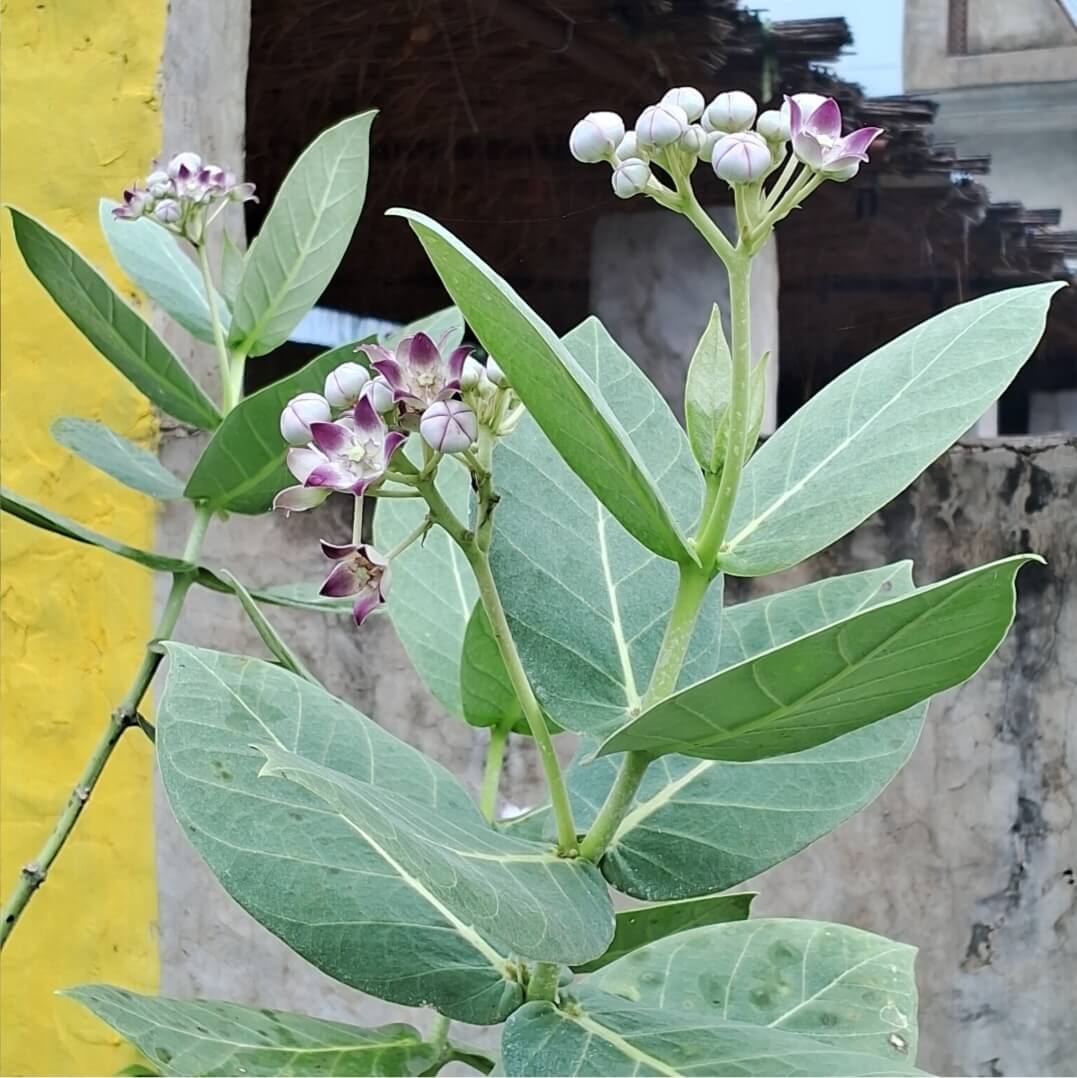
Calotropis procera: Leaves and Inflorescence
Leaves: Opposite and decussate, simple, covered with white, cottony or waxy powder coating/pubescence (xerophytic adaptation), venation reticulated. Inflorescence: Umbellate comes borne on Axillary peduncles. -
1000148789
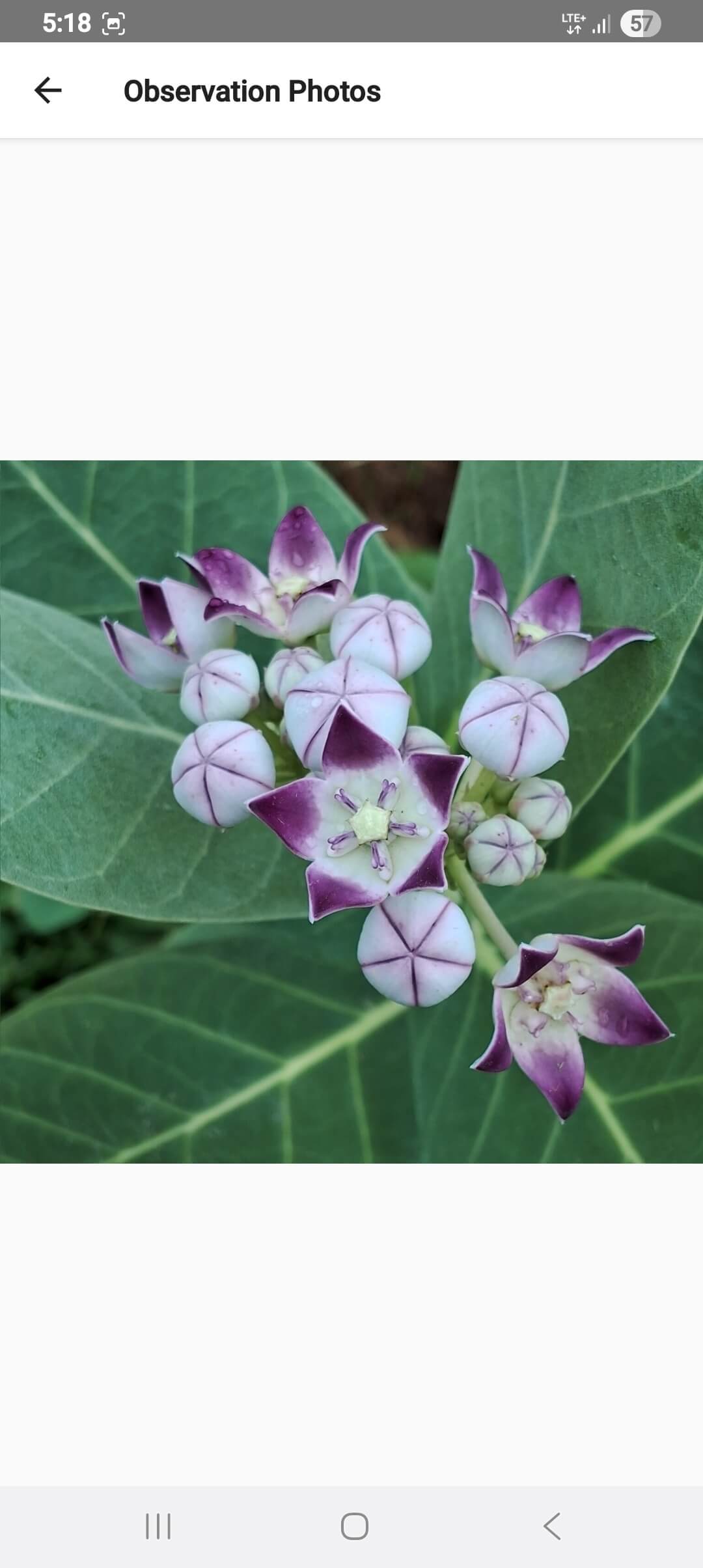
Calotropis procera: Flower
Flower: Bracteate, pedicellate, complete, actinomorphic, bisexual, hypotenuse, pentamerous. Calyx: 5, polysepalous or slightly gamosepalous, quincuncial imbricate, green covered with whitish pubescence, inferior. Corolla: 5, gamopetalous, campanulate, valvate, white with purple tip, inferior. Corona: 5 coronal extensions from the base of the each stamen, forming 5 cuculli, that serves as nectar containers. Androecium: 5, monadelphous filaments fused to form a column, epipetalous, anthers membranous, bithecous partially inflexible along margin of stigmatized disc and united with a pentangular gynostegium, pollen grains of one sac form one pollinium, pollination from adjacent anthers are attached to common corpuscular by 2 caudicles, entire contraption is a rider or translator apparatus meant for cross pollination by insects. Gynoecium: Bicarpellary, apocarpous, ovary superior, unilocular, marginal placentation, 2 styles fused at the top, stigma: a pentangular disc fused with stamens to form gynostegium. Fruits: Dry dehiscent etaerio of follicles with comose seeds. Sources: Gurcharan Singh, Dan Eisikowitch, 1985. -
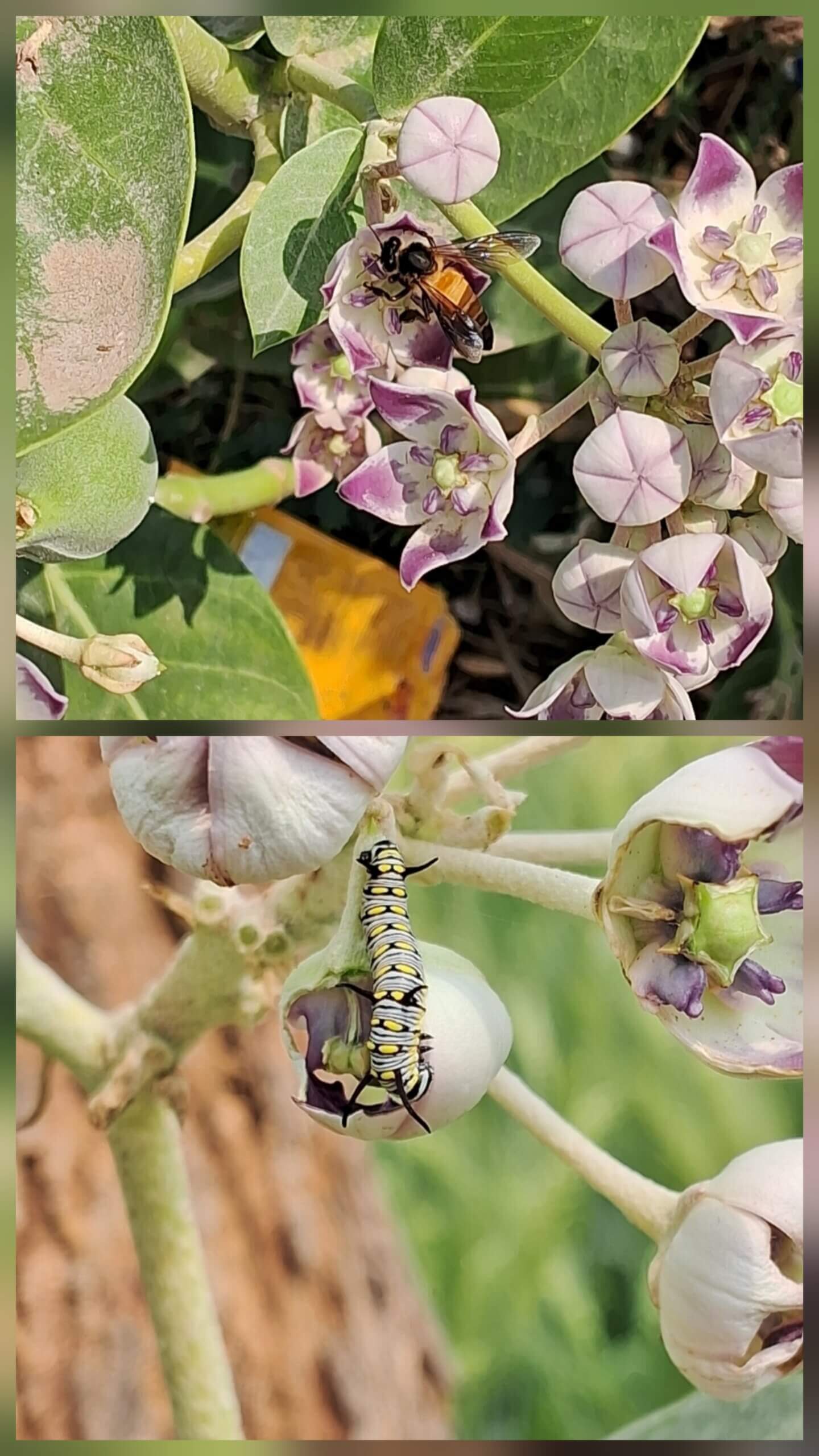
1000163628
Ecological parts
In frame(upper part) A Giant honey bee collecting nectar and pollinating the flower. In lower part of the frame: A caterpillar of Plain Tiger butterfly feeding on its flower buds; Calotropis procera is a host of Plain Tiger Butterfly.