
IUCN Status
 : Not Applicable
Author: Neetu Kumari
Hi! Neetu this side, I'm a keen observer of the nature around me since my childhood and I always wanted to share the beauty of the mother nature with others too, so, I'm here to share my observations about plants.
- Shrubs
- Khetri / Jhunjhunun
- Naturally grown
-
It is a natve, subshrub and grows primarily in the desert or dry shrubland biome. It is reported from arid and semi-arid regions of Rajasthan, Gujarat, and Maharashtra. This plant species is Threatened as per World Conservation Monitoring Centre (WCMC).
It is traditionally used as analgesic, anti-inflammatory, sedative, anxiolytic, anti-seizure and anti-platelet. Local people consume it as ladoo in winter specially for overcoming weak body and poor stamina.
Sources: Flora of The Indian Desert by Late M.M Bhandari and S.P. Vyas, POWO
Thank you to Shushila ji for identification. -
1000115154
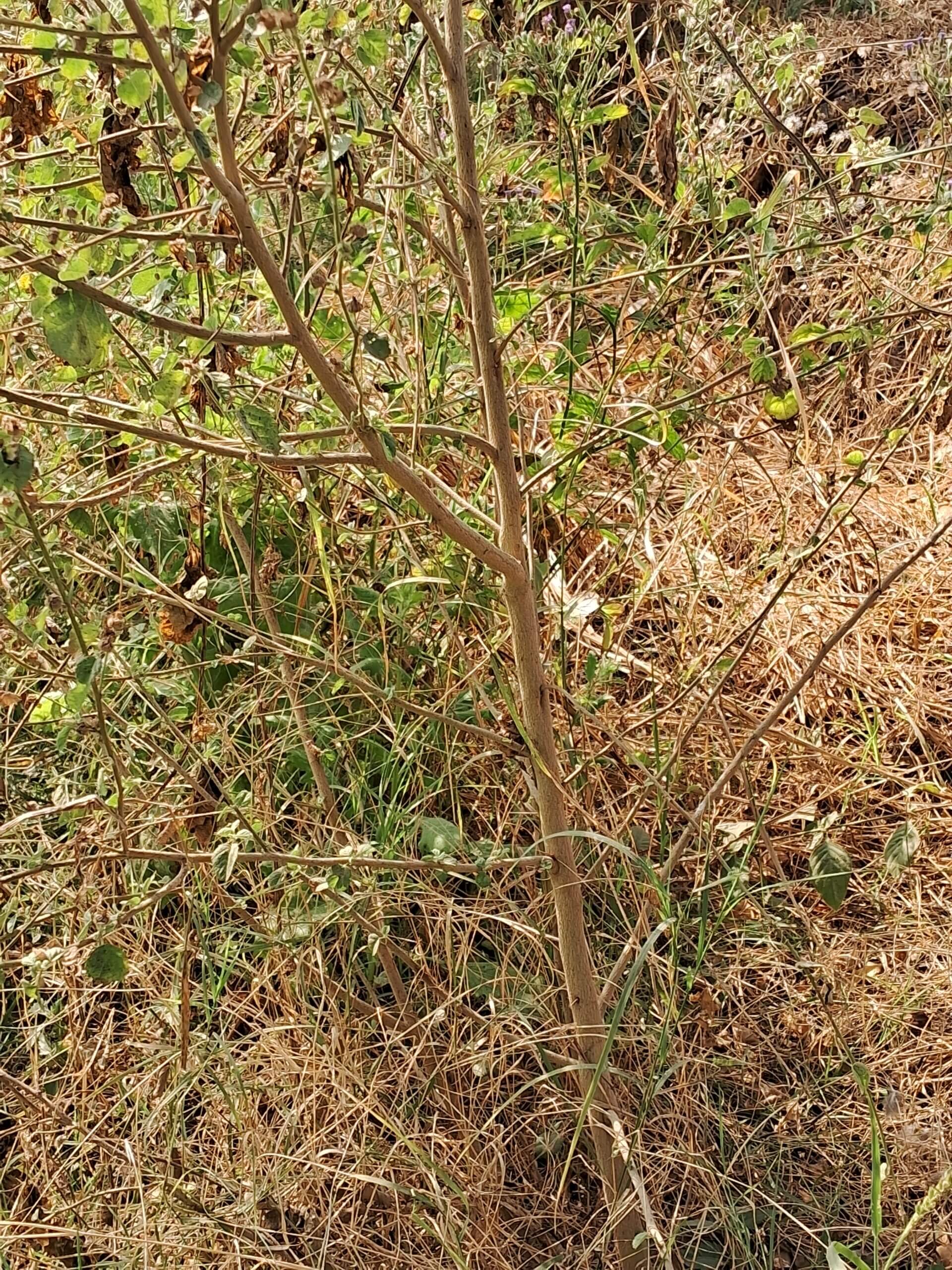
Sida tiagii Bhandari: Habit
A low, much branched, Perennial undershrub, densely stellately-tomentose all over. Stem terete or sulcate, woody at base.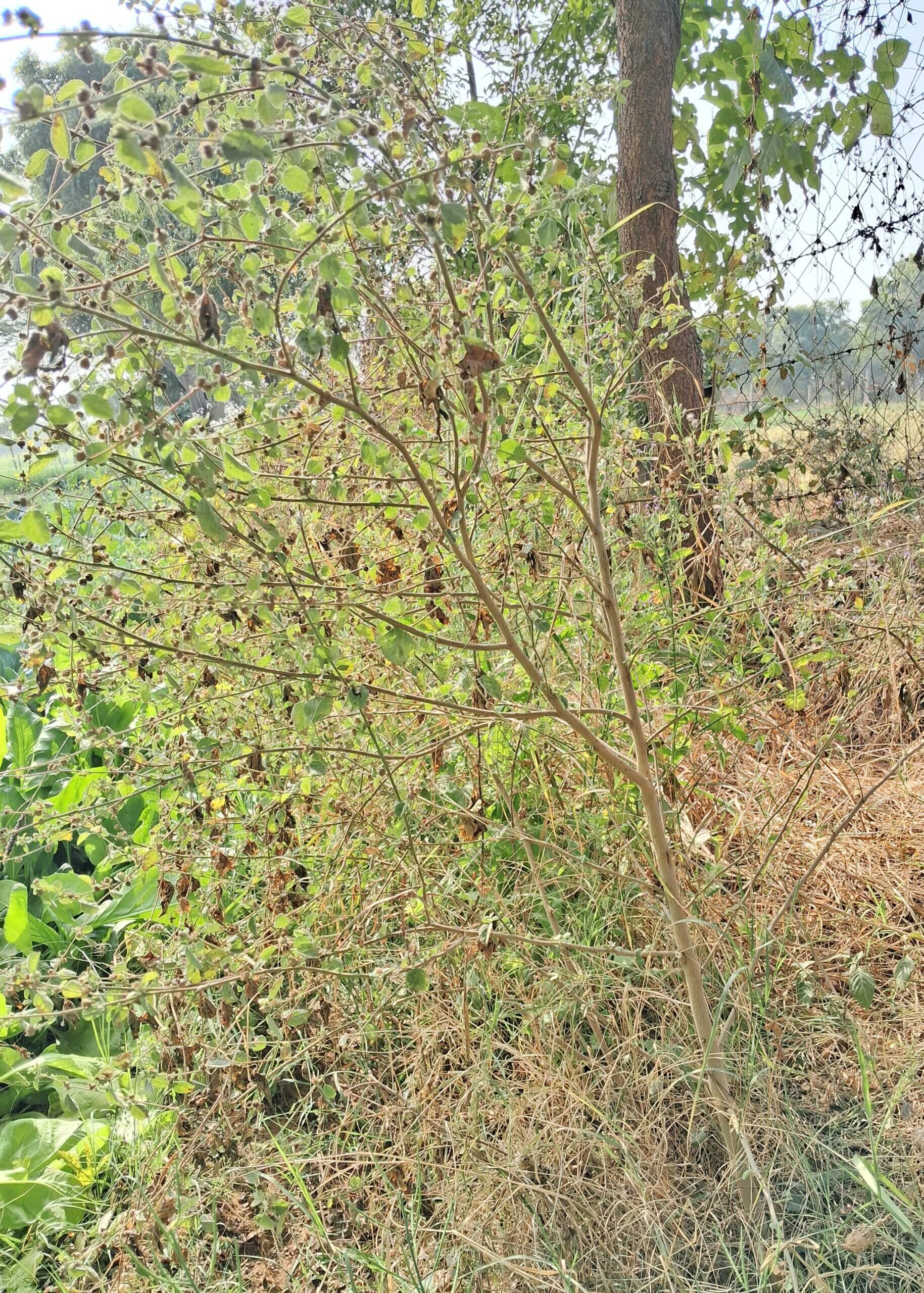
1000115172
Sida tiagii Bhandari: Habit
It a subshrub or undershrub in habit.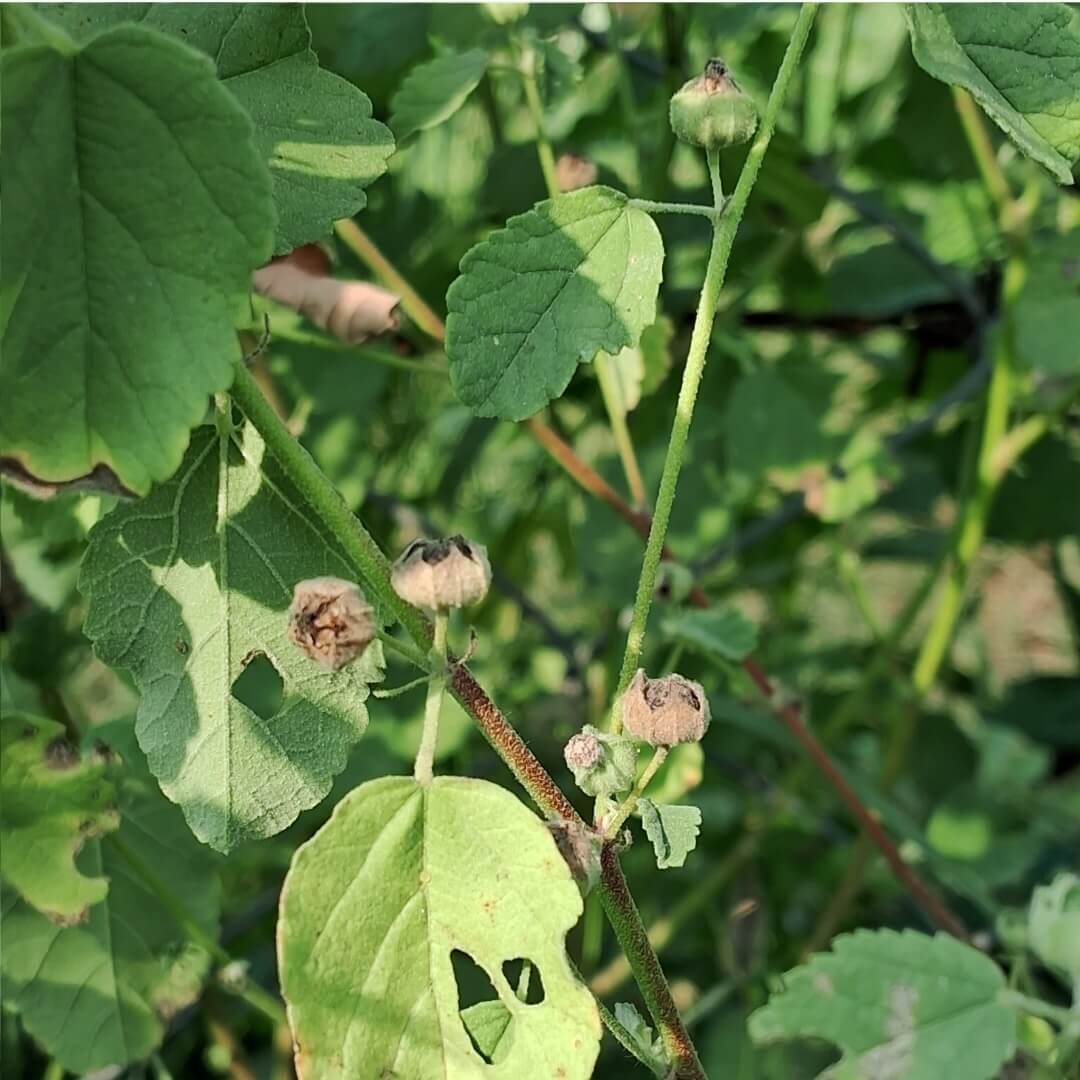
1000111275
Sida tiagii Bhandari: Leaves and Inflorescence, Calyx, Fruit
Leaves: Ovate-oblong to obovate, rounded, entire, 3-5 nerved from base, dentate above, rounded or truncate at apex, both surface stellately-hairy, densely so beneath; petioles 1-1.5 cm long, stellate. Pedicels solitary, 3-13 mm long, jointed just below the calyx. Calyx: 8-9 mm long, densely stellate, cyathiform; lobes mucronate enlarged in fruit. Fruit: Pentangular-ovoid, 9 mm in diameter, loosely but completely covered by persistent calyx. -
1000111272
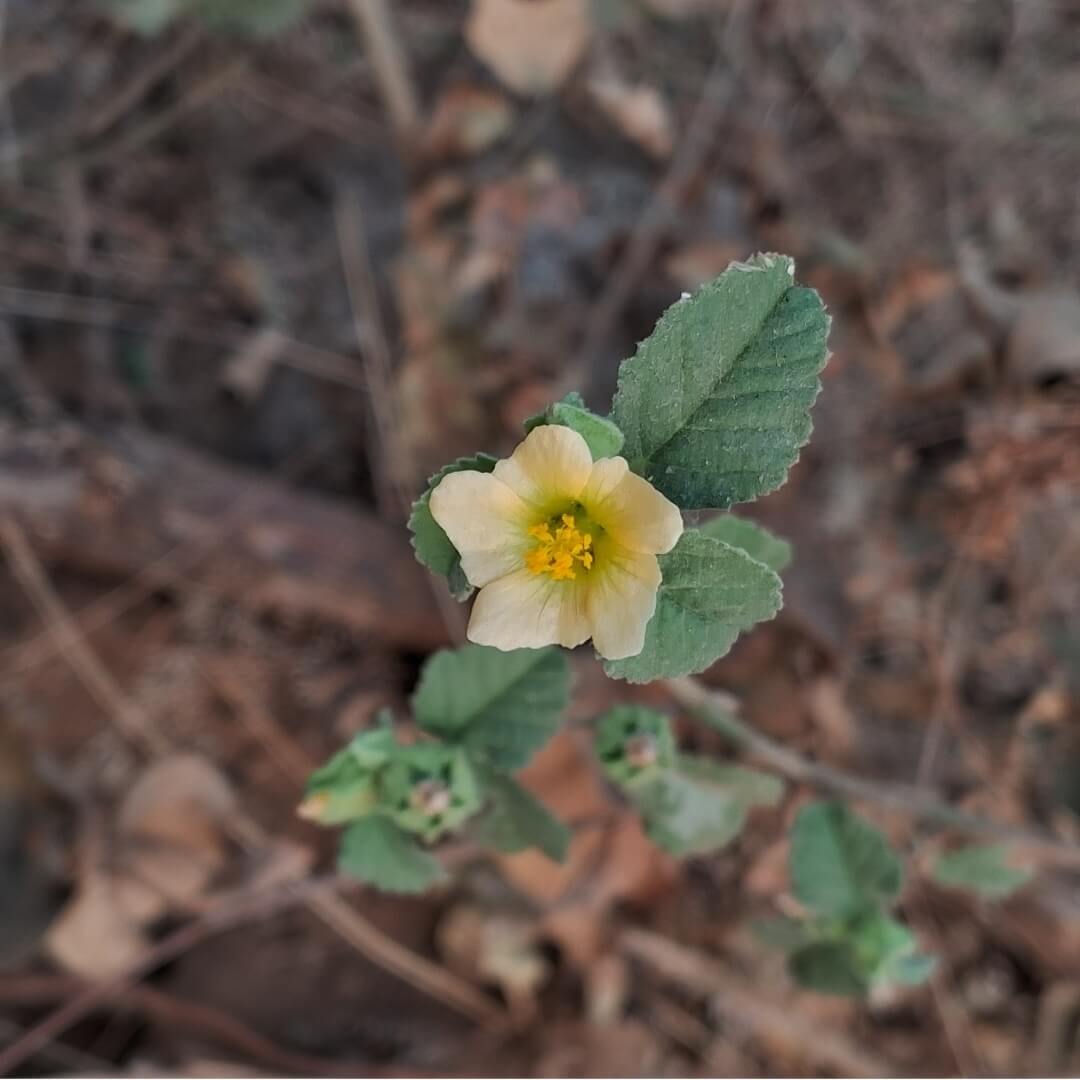
Sida tiagii Bhandari: Flower
Corolla: Pale yellow in color, 1.8 cm when fully open, petals obliquely obovoid, Staminal tube hirsute. -
1000115170
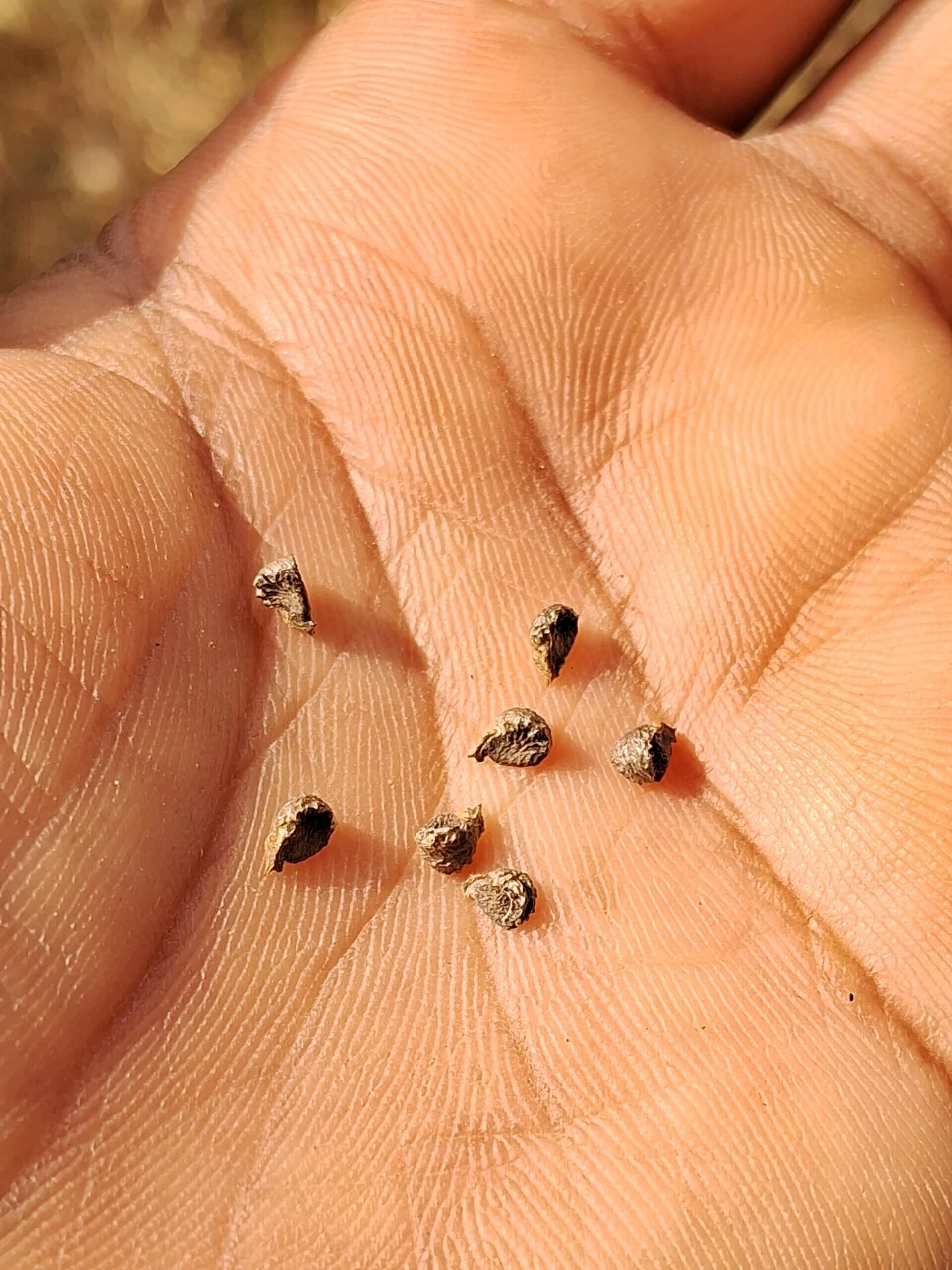
Sida tiagii Bhandari: Fruit Mericarp
Mericarps 7-8, woody, much reticulated on sides, strongly rugulose on back, studded with minute white, glandular hairs; apex hirsute, 2-awned, with 2 glands and 2 spiny out growths just below the awns, awns 5.5 mm long, hirsute. Seeds 2.5 mm long, black, glabrous, with tufts of stellate hairs at hilum.